Septic tank pumping companies · Castro County
Listings last refreshed October 16, 2026
Best Septic Tank Pumping in Dimmitt: Trusted Local Experts
1 septic tank pumping company in Dimmitt, ranked by Pump Score using Google reviews and profile data.
✓ How we rankFree directory, no pay-to-rank
If you need septic tank pumping in Dimmitt, TX, the two questions that matter most are how often your tank should be emptied and who can do the work. Most household tanks need service every three to five years, but the right interval depends on tank size, how many people live in the home and how much water goes down the drains. This page walks through those factors, the warning signs that a tank is overdue, and what to ask before you book.
Top Rated Septic Tank Pumping Companies in Dimmitt Compared
Compare the top picks side by side. Full write-ups follow below.
| # | Septic Company | Best for | Score | Rating | Verified |
|---|---|---|---|---|---|
| #1 | Dimmitt Pump Inc | Trying a newer local septic company | 0.8 | — | — |
Dimmitt Septic Tank Pumping Reviews and Ratings
1. Dimmitt Pump Inc
Best for: Trying a newer local septic company
1334 US-385No reviews yet
Score breakdown and details
- Location
- Dimmitt · 1334 US-385, Dimmitt, TX 79027
- Track record
- New or lightly reviewed
- Rating
- No Google reviews yet
- Profile
- Unclaimed listing (Google data)
- Today
- Hours not published
Strengths
- Direct phone number published, no lead form in the way
Watch Out For
No Google reviews yet. Ask for references or recent customers you can speak to.
Our take: Our top pick in this area. A Pump Score of 0.8/10 reflects the best combination of rating, review depth and profile completeness here.
Hiring Local Septic Tank Pumping in Dimmitt
Our directory is independent, and it ranks companies by Pump Score. For Dimmitt, we currently list one septic pumping company, Dimmitt Pump Inc, in ZIP 79027. That means the ranking below is a single entry, not a comparison. We have no review count for the Dimmitt listing in our data, so we do not recommend it on reputation. We show the listing so you can call and ask the questions covered later on this page.
Dimmitt sits on the Texas Panhandle plains, where many homes are on private lots and the nearest larger towns are a long drive away. That makes planning ahead more useful than in a dense city. Read the sections on timing, costs and access before you call, and you will be in a better position to get a clear answer and a fair price.
What the Dimmitt Listing Shows Right Now
Our directory lists one septic pumping company in Dimmitt. The entry is Dimmitt Pump Inc, located at 1334 US-385, with the phone number (806) 369-7921. The company is ranked below by Pump Score, and because it is the only entry for the town, the ranking does not show how it compares with other local firms.
Our data has no review count for this listing, so there is no public reputation to lean on yet. That is a reason to call and ask direct questions, not a reason to skip the call. A company with a short track record in our directory can still give clear answers about pricing, scheduling and tank access. Treat the listing as a starting point and check everything in writing before the crew arrives.
How Often a Dimmitt Home Should Pump a 1,000 Gallon Tank
Pumping frequency is not a fixed number. A common 1,000 gallon tank serving a household with normal water use usually falls in the three to five year range. The table below shows how common household conditions shift that timing. These are general guidelines, and a septic inspection can confirm the actual sludge and scum levels.
| Household situation | General pumping guidance |
|---|---|
| Two or three people, normal water use | Plan for about every four to five years |
| Larger household or frequent guests | Plan for about every three to four years |
| Garbage disposal in regular use | Check sooner, since extra solids reach the tank |
| Heavy laundry or long showers | Check sooner, since more water moves through the system |
| Tank history unknown, or home recently bought | Have the tank inspected before setting a schedule |
Warning Signs a Dimmitt Septic Tank Is Full
A full tank rarely fails all at once. The early signs are small, and they tend to get worse over a few weeks. If you notice more than one of the following, schedule pumping or an inspection instead of waiting for a backup.
- Drains in sinks, showers or tubs run slowly, even after clearing them
- Toilets gurgle when another fixture drains
- Sewage odor appears near the tank, the drain field or inside the house
- Patches of grass over the drain field stay unusually green or soft
- Water pools near the tank lid or the drain field after rain
- Sewage backs up into a shower or floor drain when toilets flush
What Not to Put Down the Drain
Most septic problems start with what goes into the system. Solids that do not break down settle in the tank and fill it faster than normal use would. Chemicals can also disturb the bacteria that help break waste down. Keep these items out of the drains and toilets:
- Grease, fat and cooking oil, which harden and clog outlets
- Wipes, including those labeled flushable, which do not break down
- Feminine hygiene products, diapers and cotton balls
- Coffee grounds, eggshells and other food scraps
- Paint, solvents, motor oil and pesticides
- Harsh drain cleaners and large amounts of bleach
Laundry, Water Use and the Drain Field in Dimmitt Homes
Many people ask how much laundry a septic system can handle in a day. There is no single safe number that fits every home, because the tank size, the soil and the age of the system all matter. The practical rule is to spread laundry across the week instead of running several full loads in one day. That keeps large volumes of water from reaching the drain field all at once.
Water use affects the tank and the drain field in the same way. Long showers, running a dishwasher and a washer at the same time, and frequent toilet flushing all add to the load. Fixing a running toilet or a dripping faucet reduces waste water, and that helps the tank settle solids more effectively. A drain field that stays saturated for long periods can fail sooner, and repairing one is far more costly than pumping a tank.
What Happens on a Pumping Visit
A standard pumping visit follows the same general sequence no matter which company does the work. Knowing the steps helps you ask the right questions when you book and recognize whether the job was done properly.
- Locate and uncover the tank lidThe crew finds the access lid and clears away soil or landscaping. If the lid is buried or hard to find, this step can add to the bill, so confirm the cost when you book.
- Check the tank and the bafflesThe crew looks at the tank condition and the inlet and outlet baffles or tees. Damaged baffles can let solids leave the tank and reach the drain field.
- Measure the sludge and scum layersSludge at the bottom and scum at the top show how full the tank is. The measurement helps decide whether the tank is due or whether another inspection is needed.
- Pump the tankThe crew removes the liquid and solids from the tank. Ask where the waste is taken, since disposal should follow state and local rules.
- Inspect, close and coverBefore covering the tank, the crew checks the outlet filter if one is installed and replaces the lid. Ask for a written note of what was pumped and what was found.
Questions to Ask Before Booking in Dimmitt
With one listed company in town, your questions carry more weight. A clear answer on each point below helps you avoid surprises on the day of service. Get the answers in writing if you can.
- What is the total price for a 1,000 gallon tank, and does it include lid location?
- Is there a callout fee for evening, weekend or same day service?
- Will the crew uncover and locate the lid, and is that included or billed separately?
- How will the company handle an inspection if it finds a problem?
- Can the crew give a window for arrival, since rural routes can take longer?
- Does the company need the tank size, and do you have a copy of the system layout?
- Will you receive a written record of the service and the tank condition?
Choosing Between Pumping, Inspection and Repair
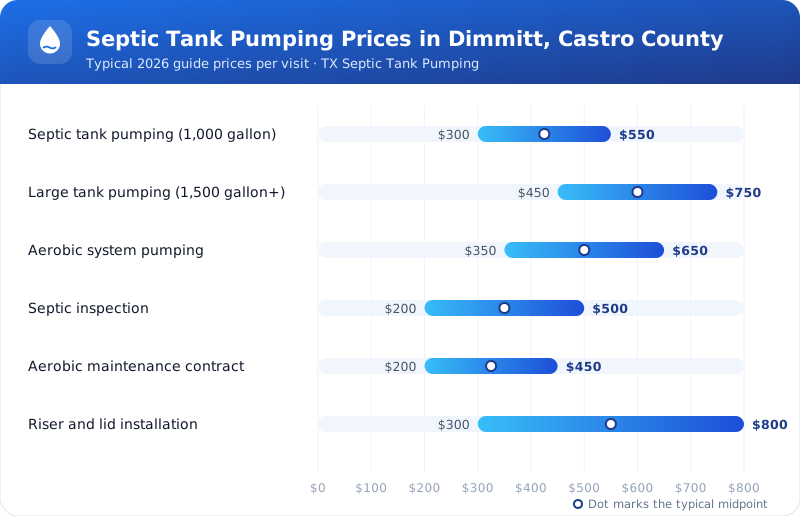
Pumping is the most common visit, but it is not always the right first step. If you have not had the system checked in years, an inspection can show whether pumping is needed and whether a deeper problem is developing. The table compares the most common visits, with the guide ranges from our pricing section.
| Visit | When it usually fits | Guide range (USD) |
|---|---|---|
| Septic tank pumping, 1,000 gallon | Routine service when sludge and scum build up | $300 to $550 |
| Septic inspection | Unknown tank history, home purchase or warning signs | $200 to $500 |
| Riser and lid installation | Buried lid that is hard to reach or unsafe to open | $300 to $800 |
| Drain field repair | Saturated or failing drain field after the tank is checked | $2,000 to $10,000 |
Scheduling Service Across the Panhandle Plains
Scheduling is harder in a rural area. A crew may need to drive a long way, and a lot with an old tank may need extra time to find the lid. Calling early gives the company more room to fit your visit into its route and gives you time to clear a path to the tank. Remove vehicles, stored items and heavy landscaping from the area over the tank before the crew arrives.
Some homeowners in the region set their pumping dates around household events. Scheduling a visit before a large family gathering or before a period of heavy guest traffic helps prevent a backup at a busy time. Keep a simple record of each pumping date so the next visit is not a guess.