Septic tank pumping companies · Callahan County
Listings last refreshed October 16, 2026
Best Septic Tank Pumping in Cross Plains [Updated 2026]
1 septic tank pumping company in Cross Plains, ranked by Pump Score using Google reviews and profile data.
✓ How we rankFree directory, no pay-to-rank
Septic tank pumping Cross Plains TX property owners search for usually comes down to two questions: who can come out, and what should it cost? This page answers both. Our directory lists one company in town, B & B Septic Services, so the ranking below is short. The sections that follow explain how a pump visit works, how to spot a tank that is overdue, and what to keep out of your system between visits.
Top Rated Septic Tank Pumping Companies in Cross Plains Compared
Compare the top picks side by side. Full write-ups follow below.
| # | Septic Company | Best for | Score | Rating | Verified |
|---|---|---|---|---|---|
| #1 | B & B Septic Services | Weekend bookings, open Saturday and Sunday | 3.4 | 5 reviews | — |
Cross Plains Septic Tank Pumping Reviews and Ratings
1. B & B Septic Services
Best for: Weekend bookings, open Saturday and Sunday
24001 Co Rd 4145 reviews
Score breakdown and details
- Location
- Cross Plains · 24001 Co Rd 414, Cross Plains, TX 76443
- Track record
- New or lightly reviewed
- Rating
- 5 Google reviews
- Profile
- Unclaimed listing (Google data)
- Today
- See hours on profile
Strengths
- Direct phone number published, no lead form in the way
- Opening hours published
- Open on Saturdays
Watch Out For
Only 5 reviews so far, so the rating could still move. Worth asking about experience.
Our take: Our top pick in this area. A Pump Score of 3.4/10 reflects the best combination of rating, review depth and profile completeness here.
Hiring Local Septic Tank Pumping in Cross Plains
Most household tanks need pumping every three to five years, though the right interval depends on tank size, how many people live in the home, and how much solid waste goes down the drain. A pump-out removes the sludge and scum that build up over time. Skipping it can let solids travel into the drain field, which is the costliest part of the system to repair. Waiting until a toilet backs up usually means the job is already overdue.
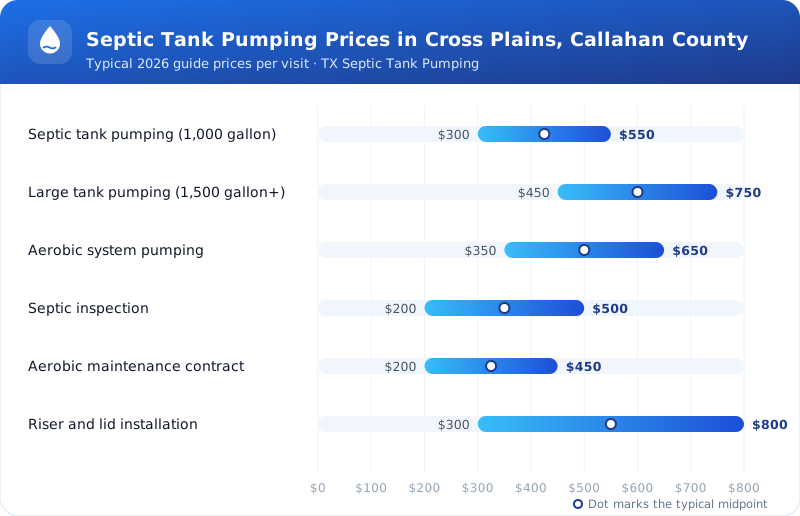
Prices on this page are guide ranges for planning, not quotes. Your final cost depends on tank size, how easily the lid can be reached, and any extra work the crew finds once the tank is open. Use the numbers as a starting point, then ask for a written estimate before any work begins.
Who Pumps Septic Tanks in Cross Plains and ZIP 76443
Our directory lists one septic company in Cross Plains, B & B Septic Services, located at 24001 Co Rd 414 in ZIP 76443. The business has five Google reviews and a Google rating of 5. Its listing shows it open seven days a week and 24 hours a day. The phone number is (254) 725-4466. The company below is the only ranked option for this town, so it is the starting point for any septic tank pumping job in Cross Plains.
Search results for this phrase also return listings from places with similar names, such as Plains and South Plains in West Texas. Those are different towns, so check the street address and ZIP code before you call. A quick look at the ZIP code will tell you whether a provider serves your side of Callahan County or a place hundreds of miles away.
Warning Signs Your Cross Plains Tank Is Due
A full tank rarely fails all at once. It usually sends small signals first. Watch for any of the following, and treat two or more together as a strong sign that a pump-out is overdue.
- Drains throughout the house run slowly, not just one sink or tub.
- Toilets gurgle, bubble, or drain slowly after you flush.
- Sewage odors show up near the tank lid, the drain field, or indoor drains.
- Soil over the drain field stays soggy, or the grass there grows unusually thick and green.
- Water backs up into a shower or tub when you flush a toilet.
- A service inspection shows sludge or scum layers close to the outlet baffle.
What Happens During a Pump-Out Visit
A standard visit is short, but the steps matter. Knowing what the crew should do helps you judge the quality of the service and spot anything that needs follow-up.
- Find and open the lidThe crew locates the tank and opens the lid. Buried lids can take extra time to find, and that work is priced separately in our guide at $50 to $200.
- Measure the layersA good technician checks the depth of the scum layer on top and the sludge layer on the bottom. These numbers show how full the tank is and whether it is due.
- Pump the tankThe tank is emptied of its contents. The crew should also check the baffles and outlet for damage or clogging while the tank is open.
- Review the findingsAsk the technician to explain what they saw, including any cracks, leaks, or a failing outlet. Request a written note for your records, since future buyers and inspectors often ask for it.
Risers, Lids, and Getting Access to Your Tank
Many older tanks are buried deep, with the only access point under several inches of soil. If a crew has to dig every time they pump, the job takes longer and costs more. That is why many owners consider a riser, a raised extension that brings the access point closer to the surface, with a secured lid on top.
Why a Riser Can Pay Off
Installing a riser and lid in our guide runs $300 to $800. The cost can make sense for a home that is pumped regularly, because the crew can reach the tank quickly and with less digging. Risers also make it easier to inspect the tank yourself and keep the lid safe for children and pets.
Keeping the Area Clear
Do not park vehicles on the tank or drive over the drain field. Keep the lid visible and avoid planting deep-rooted trees or shrubs near the system, since roots can damage pipes and the drain field. Mark the location on a simple sketch of your property so the crew, or you, can find it the next time.
What Not to Put in a Septic System
A septic tank depends on a balance of bacteria that break down waste. Some everyday products upset that balance, clog outlets, or carry solids to the drain field faster than the tank can handle. Keep the following out of the drain, even when a label says flushable or safe.
- Wet wipes and baby wipes, including ones marketed as flushable
- Grease, cooking oil, and fat poured down a sink
- Coffee grounds and food scraps in quantity
- Diapers, feminine products, and cotton swabs
- Paper towels and heavy paper products
- Chemical drain cleaners, paint, solvents, and pesticides
- Medications and other chemicals that kill bacteria
Laundry, Water Use, and Everyday Habits
A common question is how many loads of laundry a day a septic system can handle. No single number fits every home, because the answer depends on tank size, the number of people in the house, and how the drain field is built. What matters more is the pattern. Running several machines back to back sends a large surge of water into the tank in a short window, which can push solids toward the outlet.
Spread laundry across the week, and avoid doing a full day of washing at once. Fix leaking faucets and running toilets, since a steady drip adds water every day. Shorter showers and staggered dishwasher use help too. These habits cost little and reduce strain on the system between pump-outs, which often makes the difference between a routine visit and an early repair call.