Septic tank pumping companies · Burnet County
Listings last refreshed October 16, 2026
Best Septic Tank Pumping in Bertram, Ranked by Real Reviews
1 septic tank pumping company in Bertram, ranked by Pump Score using Google reviews and profile data.
✓ How we rankFree directory, no pay-to-rank
Septic tank pumping Bertram TX is a routine service that most households only think about once something goes wrong. This guide covers how often to pump, what the warning signs look like, what the work costs in Texas, and how to pick a company before you need one.
Top Rated Septic Tank Pumping Companies in Bertram Compared
Compare the top picks side by side. Full write-ups follow below.
| # | Septic Company | Best for | Score | Rating | Verified |
|---|---|---|---|---|---|
| #1 | Gator Septic & Trenching | A local septic company you can call direct | 1.9 | 2 reviews | — |
Bertram Septic Tank Pumping Reviews and Ratings
1. Gator Septic & Trenching
Best for: A local septic company you can call direct
119 Oaks Rd2 reviews
Score breakdown and details
- Location
- Bertram · 119 Oaks Rd, Bertram, TX 78605
- Track record
- New or lightly reviewed
- Rating
- 2 Google reviews
- Profile
- Unclaimed listing (Google data)
- Today
- Hours not published
Strengths
- Direct phone number published, no lead form in the way
Watch Out For
Only 2 reviews so far, so the rating could still move. Worth asking about experience.
Our take: Our top pick in this area. A Pump Score of 1.9/10 reflects the best combination of rating, review depth and profile completeness here.
Hiring Local Septic Tank Pumping in Bertram
Bertram sits in Burnet County, and the directory currently ranks one company for the town. That changes how you should read this page. Instead of a long list to compare, you get a single ranked listing, a clear picture of what to check, and a set of questions to ask any septic company before you book. Nearby towns such as Liberty Hill, Burnet and Marble Falls are within a short drive, so it also helps to ask how far a company will travel to reach your lot.
The sections below explain how tanks fill and what a pumping visit involves, compare conventional tanks with aerobic systems, and list what should never go into the system. The pricing section gives guide ranges for common septic work, and the FAQs answer the questions people search for most often. Use the page as a checklist, then call.
How Often a Bertram Household Should Pump Its Tank
Most septic tanks should be pumped every three to five years. That range is general guidance, and the right interval for your home depends on tank size, how many people live there, and what goes down the drains. A 1,000-gallon tank serving a family of four fills faster than the same tank serving two adults, and a larger tank can stretch the interval.
Solids settle to the bottom of the tank and grease and scum float to the top. Over time the layer of solids grows until it can carry material toward the outlet and into the drain field. That is the point where a pump-out prevents damage that costs far more to fix than the pumping itself. Keeping a written log of each service date makes the next visit easy to schedule.
Warning Signs Your Tank Needs Pumping Now
A full or overloaded tank usually shows itself in the house before it shows up in the yard. Watch for the following signs, and treat more than one of them as a reason to call a technician soon.
- Drains throughout the house run slowly, not just one sink or tub.
- Pipes gurgle when water is running or when a toilet is flushed.
- Toilets back up or drain sluggishly when a shower or washer is running.
- A sewage smell appears near the tank, the drain field or indoor drains.
- The grass over the drain field is unusually lush, soggy or green in a strip.
- Water pools near the tank lid or the drain field after rain has stopped.
- The tank has not been pumped in more than five years and no one knows the last service date.
What Happens During a Septic Pumping Visit
A standard pumping visit is short, but each step matters. Knowing the sequence helps you ask the right questions when you book and when the crew arrives.
- Locate the tank and lidThe crew finds the tank and its access lids. If the lid is buried, expect a separate charge for locating and uncovering it, which the guide range puts at $50 to $200.
- Open the access pointsLids are opened so the crew can reach the tank contents. Ask whether risers are in place, because an open riser makes future visits faster.
- Pump out the contentsThe crew removes the liquid and settled solids. Wastewater from the tank is hauled off site, not released on the property.
- Check the tank and componentsA careful visit includes a look at the baffles, the outlet and any effluent filter. Damage or clogs found here are easier to fix before the drain field is affected.
- Record the service and plan the next oneAsk for a written record of the pumping date and the condition of the tank. Use that date to set the next reminder, usually in three to five years.
Conventional Tanks Compared With Aerobic Systems
Not every home in Burnet County has a plain septic tank. Some properties use an aerobic treatment unit, which adds air to break down waste before it reaches the drain field. The two systems need different kinds of attention, and the costs are not the same. Check which one you have before you book, since the company will ask.
| Feature | Conventional septic tank | Aerobic treatment system |
|---|---|---|
| How it treats wastewater | Solids settle in the tank and the drain field handles the rest | Air is added to break down waste before the drain field |
| Typical pumping interval | Every three to five years | Pumping as directed, plus regular service visits |
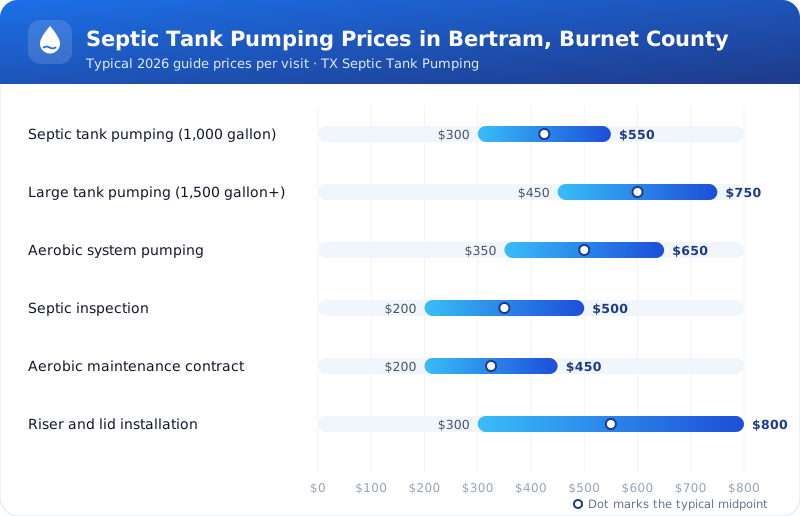
| Yearly maintenance contract | Not usually required | Guide range of $200 to $450 per year |
| Guide price for pumping | $300 to $550 for 1,000 gallons | $350 to $650 per pumping |
| Main risk if neglected | Solids reach the drain field | Treatment performance drops and the system needs repair |
Reading the One Listing Ranked for Bertram
Gator Septic & Trenching is the only company in Bertram on this directory's ranked list. The listing shows a business address of 119 Oaks Rd in ZIP 78605 and a phone number of (512) 355-2986. It has two Google reviews. A sample that small tells you very little about day-to-day service, so treat the listing as a starting point, not a verdict.
The listing does not describe a specific list of septic services, so do not assume what the company does from its name. Call and ask directly whether the company pumps conventional tanks, serves aerobic systems, offers inspections, and installs or repairs risers. Ask for the guide range comparison in writing, and confirm how it charges for weekend or emergency visits.
What Not to Flush or Pour Down the Drain
Most septic failures start with what goes into the system, not with how often it was pumped. These items cause the most trouble, and each one shortens the time between pumpings.
- Cooking grease, oil and fats, which harden in pipes and clog the outlet.
- Wipes of any kind, including those labeled flushable, which do not break down like toilet paper.
- Feminine hygiene products, diapers and paper towels.
- Coffee grounds and food scraps that settle into the tank as solids.
- Chemical drain cleaners, paint, solvents and motor oil.
- Unused medications, which can disrupt the bacteria that break down waste.
- Harsh bleach or cleaning products used in large amounts over short periods.
Spreading Out Laundry and Water Use in Bertram Homes
The drain field can only absorb so much water at once. Running several large loads of laundry in the same day, or running the dishwasher and shower together, sends a surge of water into the tank faster than the drain field can handle it. Spreading laundry across the week keeps that surge smaller and reduces stress on the system.
Fixing running toilets and dripping faucets also helps. A slow leak can add a steady volume of water to the tank every day, which shortens the time between pumpings and can saturate the drain field over time. These habits cost nothing and make each pumping last longer.
Questions to Ask Before You Book in Bertram
The Texas Commission on Environmental Quality regulates on-site sewage facilities in Texas, so any septic work should follow state rules. Before you agree to a visit, ask the company a few direct questions. The answers will tell you more than a star rating or a review count.
- Will you give me a written estimate that lists each charge separately?
- Do you charge extra to locate or uncover a buried lid?
- Is there a fee for a weekend or emergency visit, and how much is it?
- Will you check the baffles, outlet and any effluent filter during the visit?
- What is the earliest date you can come, and will you call before arriving?
- Can you provide a written record of the pumping date and tank condition?
- How far do you travel to reach homes in Bertram and nearby towns?