Septic tank pumping companies · Brazoria County
Listings last refreshed October 16, 2026
Best Septic Tank Pumping in Freeport [Updated 2026]
1 septic tank pumping company in Freeport, ranked by Pump Score using Google reviews and profile data.
✓ How we rankFree directory, no pay-to-rank
Septic tank pumping in Freeport, TX is one of those jobs homeowners think about only after a slow drain or a sewage smell shows up. Regular pumping costs less and disrupts your household far less than waiting for a backup. This page covers who is ranked for the area, how often a typical tank needs service, the warning signs that a tank is full, and what the visit itself involves.
Top Rated Septic Tank Pumping Companies in Freeport Compared
Compare the top picks side by side. Full write-ups follow below.
| # | Septic Company | Best for | Score | Rating | Verified |
|---|---|---|---|---|---|
| #1 | Brazoria County Septic Service | Checking services and hours online before you call | 6.2 | 37 reviews | — |
Freeport Septic Tank Pumping Reviews and Ratings
1. Brazoria County Septic Service
Best for: Checking services and hours online before you call
332 County Rd 22337 reviews
Score breakdown and details
- Location
- Freeport · 332 County Rd 223, Freeport, TX 77541
- Track record
- Growing review base
- Rating
- 37 Google reviews
- Profile
- Unclaimed listing (Google data)
- Today
- See hours on profile
Strengths
- 37 Google reviews, a well established track record
- Direct phone number published, no lead form in the way
- Has its own website with more detail on services
- Opening hours published
Watch Out For
The Google profile is not owner verified. Double check the address and phone when you call.
Our take: Our top pick in this area. A Pump Score of 6.2/10 reflects the best combination of rating, review depth and profile completeness here.
Hiring Local Septic Tank Pumping in Freeport
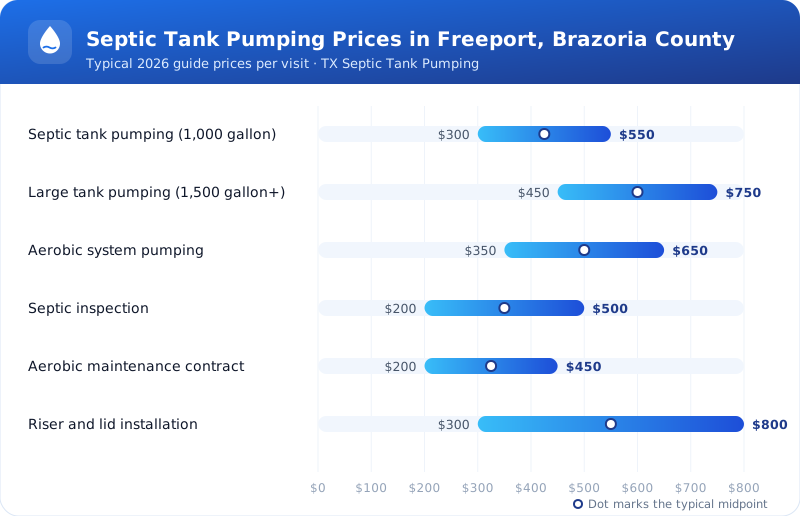
The short version: the directory currently lists one ranked septic company for Freeport, Brazoria County Septic Service, with 37 Google reviews and a 4.8 rating. Everything below is written so you can judge that option, compare guide prices, and decide whether to book now or after checking a few details yourself.
People searching for septic tank pumping freeport tx usually need an answer quickly. If you have sluggish drains, gurgling fixtures, or a tank that has not been opened in years, read the warning sign and scheduling sections first, then make the call.
Who Pumps Septic Tanks Near Freeport Right Now
The listings for Freeport show one ranked company. Brazoria County Septic Service is located at 332 County Road 223, Freeport, TX 77541, and its phone number is (979) 848-2229. The business lists residential septic pumping, commercial septic services, and RV holding tank pump-outs among its work. Search snippets for the company also mention grease trap pumping, so ask about that if your property has one.
Search results for this keyword also include directory pages and businesses based in other towns. Read the address and service area on each page before you call. A company based in a neighboring town may not cover your street, and a pumper that is 30 minutes away can still be a good choice if it serves your ZIP code regularly.
Because Freeport has a single ranked listing, it helps to compare what you learn from that company against the questions in the checklist further down this page. Even one good option is worth vetting before you commit.
How Often a 1,000 Gallon Tank in Freeport Needs Pumping
A common 1,000 gallon residential tank is usually pumped every three to five years. That range is a starting point rather than a rule. Household size, daily water use, garbage disposal use, and whether the tank has an effluent filter all change the answer, and so does the amount of solids that enter the tank from the kitchen and bathrooms.
Going 20 years without pumping is not a plan. Solids keep building up over time. Once the sludge layer grows deep enough, it moves toward the outlet and the drain field. A tank that has gone a decade or more without service may already be past the point where a routine pump out fixes the problem, which is why an inspection can be worth the cost before you commit to a schedule.
Use the table as a planning guide, then confirm the interval with the pumper after the first visit. A written note on the sludge and scum levels will tell you more than any general rule.
| Household situation | Pumping interval to plan for |
|---|---|
| Two people, low water use, no garbage disposal | Toward the longer end, about four to five years |
| Family of four, average water use | Around three to four years |
| Heavy daily use, frequent guests, garbage disposal | Often sooner than three years |
| Aerobic system | Follow the service schedule in the maintenance contract |
Warning Signs Your Tank Is Full Before It Backs Up
A full tank usually gives warning before wastewater reaches the house. Pay attention to changes in how fixtures drain, especially if several of them slow down at the same time. A single slow sink can be a clog, but a pattern across the house points to the tank or the field.
What happens to a toilet when the septic tank is full? The toilet may drain slowly, bubble, or back up when another fixture runs. In a full tank, wastewater has little room to settle, so solids can flow out of the tank into the drain field and clog the soil there. That repair costs far more than pumping, which is why early signs deserve a call.
- Drains run slowly, especially several fixtures at once
- Toilets gurgle or need more than one flush to clear
- A sewage smell near the tank, in the yard, or indoors
- Patches of unusually green, lush grass over the drain field
- Soggy ground or standing water above the tank or field
- Backups in the lowest drain, such as a shower or floor drain
What Not to Put in a Septic Tank
Most septic trouble starts with what goes down the drain. The tank relies on bacteria to break waste down, and solids or chemicals that do not break down can clog the outlet or upset that balance. A few habits make a large difference over the years.
The worst thing to put in a septic tank is usually grease or non-flushable wipes. Grease hardens and blocks the flow, and wipes, including ones labeled flushable, do not break down in the tank the way toilet paper does. Spread laundry across the week rather than running many loads in one day. A large volume of water pushes solids out of the tank faster than they can settle, which is hard on the drain field over time.
- Grease, cooking oil, and fat from frying or pan drippings
- Wipes of any kind, including those marketed as flushable
- Diapers, feminine products, and paper towels
- Coffee grounds and large amounts of food scraps
- Harsh drain cleaners or large amounts of bleach
- Paint, solvents, motor oil, and pesticides
What Happens During a Septic Pumping Visit
A pumping visit is short for most standard tanks, but a few steps determine whether you get useful information along with the pump out. Knowing the sequence lets you ask the right questions at each stage.
- Locate the tank lidThe technician finds the access lid. If the lid is buried under soil or grass, locating and uncovering it is a separate charge, typically $50 to $200 in the guide range.
- Open the tank and check levelsThe lid is opened and the sludge and scum layers are measured. This tells the technician how full the tank is and how long it has been since the last service.
- Pump out the wasteWaste is removed from the tank. A good pumper also checks the baffles and outlet so that solids are not leaking toward the drain field.
- Review and set the next dateAsk for notes on the condition of the tank and a recommended date for the next pumping. Keep those notes with your home records.
Ask Whether an Inspection Is Included
A routine pump out and a full inspection are not the same job. An inspection looks at the tank structure, baffles, and outlet, and it may include notes on the drain field. It costs more, but it gives you a clearer picture before a small problem turns into a costly repair.
Aerobic Systems Need More Than an Occasional Pump Out
Some properties have aerobic treatment systems rather than conventional tanks. These units use air to treat wastewater, and they depend on mechanical parts such as pumps, blowers, and filters. Because of that, they need a maintenance contract on top of occasional pumping. Skipping that service is a common way to end up with a system that stops working as designed.
If your property has an aerobic system, plan for pumping and for the yearly contract separately. Ask the pumper which parts it checks and how it reports issues, so you are not surprised when a pump or filter needs attention.
Questions to Ask a Freeport Septic Pumper Before Booking
A short phone call can save a lot of confusion later. Use these questions to confirm the service area, the scope of work, and the price before the truck arrives.
Brazoria County Septic Service's listing shows weekday open days. Confirm any question about urgent or weekend work by phone at (979) 848-2229 before you schedule, and ask whether it applies to your ZIP code.
- Do you serve ZIP 77541 and my street?
- Is locating and uncovering a buried lid included, or priced separately?
- Is an inspection included in the pump out, or is it a separate charge?
- Do you offer weekend or after-hours calls, and what is the extra cost?
- Do you handle aerobic systems or grease traps if my property has them?
- Will you record the tank size, sludge level, and condition in writing?