Septic tank pumping companies · Bowie County
Listings last refreshed October 16, 2026
Best Septic Tank Pumping in Hooks: Trusted & Reviewed
1 septic tank pumping company in Hooks, ranked by Pump Score using Google reviews and profile data.
✓ How we rankFree directory, no pay-to-rank
Homeowners searching for septic tank pumping in Hooks, TX usually want three things: a company that will actually come to their address, a realistic idea of what the work costs, and a clear sense of how often the tank needs attention. Hooks sits in Bowie County in the northeast part of the state, about 10 miles from Texarkana, so the local choices are thinner than what you would find in a large metro area. This page walks through pumping schedules, warning signs, what a visit involves, and how to read the single ranked listing for the town.
Top Rated Septic Tank Pumping Companies in Hooks Compared
Compare the top picks side by side. Full write-ups follow below.
| # | Septic Company | Best for | Score | Rating | Verified |
|---|---|---|---|---|---|
| #1 | CleanVac Environmental | Weekend bookings, open Saturday and Sunday | 3.5 | 6 reviews | — |
Hooks Septic Tank Pumping Reviews and Ratings
1. CleanVac Environmental
Best for: Weekend bookings, open Saturday and Sunday
9316 FM13986 reviews
Score breakdown and details
- Location
- Hooks · 9316 FM1398, Hooks, TX 75561
- Track record
- New or lightly reviewed
- Rating
- 6 Google reviews
- Profile
- Unclaimed listing (Google data)
- Today
- See hours on profile
Strengths
- Direct phone number published, no lead form in the way
- Opening hours published
- Open on Saturdays
Watch Out For
Only 6 reviews so far, so the rating could still move. Worth asking about experience.
Our take: Our top pick in this area. A Pump Score of 3.5/10 reflects the best combination of rating, review depth and profile completeness here.
Hiring Local Septic Tank Pumping in Hooks
Our directory currently ranks one company in Hooks, CleanVac Environmental, with six Google reviews. That is a small base, so read the listing carefully and compare it with businesses in nearby towns if you want more options. Routine pumping is straightforward work, but details like tank size, lid access, and whether the system is a standard tank or an aerobic unit all change the job and the price. The sections below cover each of those points so you can ask better questions on the phone.
Septic Tank Pumping Options Serving Hooks, TX
Hooks has one company in our ranked directory, so it is the only business you will see in the listing block that follows this section. CleanVac Environmental lists a street address on FM 1398 in ZIP 75561, a phone number at (903) 277-6345, and six Google reviews. The listing shows the business open every day of the week and open around the clock, which is useful if a tank backs up on a weekend.
The local map results for this search also show Ace in the Hole Septic Waste Removal LLC and WS Septic Pumping & Installation LLC. We have not ranked those businesses here and have no verified details about their services, so treat them as names to check, not as recommendations. Call each one, confirm it serves your street, and ask the same questions covered in the checklist further down this page.
How Often a Hooks Septic Tank Needs Pumping
Most households need a septic tank pumped every 3 to 5 years. That is general guidance, not a rule for every property. The right interval depends on how much solid waste enters the tank and how quickly it builds up.
- Household size: more people means more wastewater and more solids in the tank.
- Tank size: a 1,000-gallon tank fills faster than a 1,500-gallon tank serving the same home.
- Garbage disposals: they send extra food solids into the tank and can shorten the interval.
- Water use: heavy laundry days and long showers push more water through the tank at once.
- Aerobic systems: these units follow a service schedule set by their maintenance contract, so check that schedule instead of the standard 3 to 5 year rule.
Questions to Ask CleanVac Environmental Before You Book
A short phone call covers most of these points. Write the answers down so you can compare them with any other company you call.
- Confirm your address is inside the service area. The listing gives FM 1398 and ZIP 75561, but rural addresses can sit at the edge of a route.
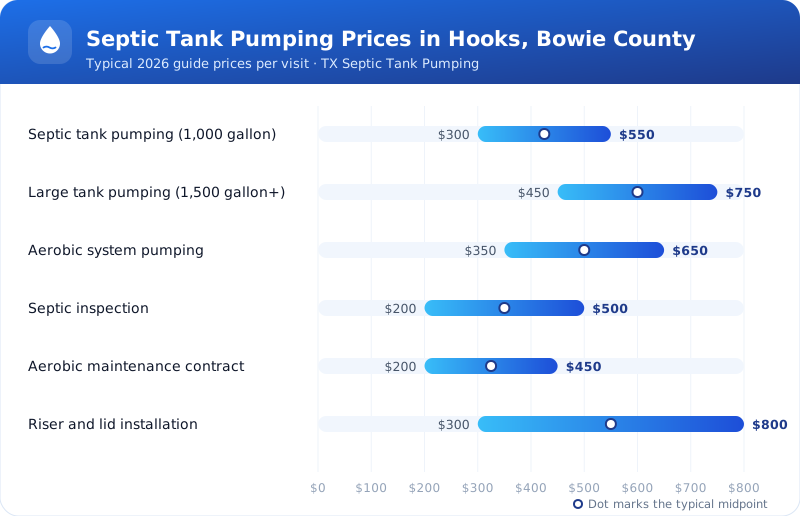
- Ask whether the quoted price includes locating and uncovering the lid, which is a separate guide range of $50 to $200 in many jobs.
- Ask which tank size the price covers, since 1,000-gallon and 1,500-gallon-plus tanks are priced differently.
- If you have an aerobic system, ask whether the company services that type before you schedule.
- The listing shows 24-hour availability, so ask whether after-hours or weekend calls add a fee. The guide range for that extra runs from $100 to $300.
- Ask for the total in writing before work starts.
- Ask for a written record of the pumping date so you can keep it with your home files.
What a Pumping Visit Usually Involves
A standard pumping visit follows the same basic sequence from one company to the next. Knowing the steps helps you judge whether the crew is working carefully.
- Locate the access pointsThe crew finds the tank lid and any access risers. Buried lids are often located first, which is the separate $50 to $200 guide range.
- Open and inspectThe lids come off, and the tank is checked for liquid level, scum, and solids before pumping starts.
- Pump the tankA vacuum truck removes the contents. The scum layer and sludge should be removed along with the liquid, not left behind.
- Check the componentsInlet and outlet baffles, and an effluent filter if the system has one, are checked and cleaned as needed.
- Close and reportThe lids go back on, the work area is tidied, and you should receive a record of the work and a suggested date for the next visit.
Warning Signs Between Pumpings
These signs do not prove a single cause, and several can show up together. Write down what you see and when, since that helps the technician who responds.
| Sign | What It Can Point To | What To Do |
|---|---|---|
| Slow drains in several fixtures | A tank that is full or a clogged outlet | Limit water use and call a pumper |
| Gurgling pipes | Air moving through a blocked or partly blocked line | Have the system checked soon |
| Sewage odor near the tank or yard | A lid or cover problem, or an overflow | Keep people and pets away from the area and call for service |
| Soggy or unusually green grass over the drain field | Effluent reaching the surface | Cut back on water use and get a professional inspection |
| Sewage backup in toilets or floor drains | A full tank or a failing drain field | Stop using water and call for emergency service |
What Not to Flush or Pour Down the Drain
Anything that does not break down easily can fill the tank faster or clog the outlet. Spacing laundry loads through the week also helps, because it keeps a large volume of water from reaching the tank all at once.
- Wipes, including those labeled flushable
- Cooking grease and oil
- Coffee grounds, eggshells, and fibrous food scraps
- Paint, solvents, pesticides, and motor oil
- Medications and harsh drain chemicals, which can upset the bacteria that help break down waste
- Feminine products and diapers
What Happens When a Tank Goes Years Without Pumping
A tank can sit for a long time without a visible problem, which is why many owners forget it. Solids keep building up, though, and eventually they move toward the outlet. Once solids reach the drain field, repairs can cost far more than routine pumping. The guide range for drain field repair is $2,000 to $10,000.
If you are unsure how long it has been, do not guess. Have the tank located, opened, and pumped, then ask the technician to note the condition of the tank and the baffles. That gives you a baseline for setting the next schedule.