Septic tank pumping companies · Bee County
Listings last refreshed October 16, 2026
Best Septic Tank Pumping in Skidmore [2026 Update]
1 septic tank pumping company in Skidmore, ranked by Pump Score using Google reviews and profile data.
✓ How we rankFree directory, no pay-to-rank
If you need septic tank pumping in Skidmore, TX, this page covers the one company based in town, what the work typically costs, and how to tell when your tank is due. Most of the guidance applies to any pumping company you call, so you can use it to judge a quote from anyone.
Top Rated Septic Tank Pumping Companies in Skidmore Compared
Compare the top picks side by side. Full write-ups follow below.
| # | Septic Company | Best for | Score | Rating | Verified |
|---|---|---|---|---|---|
| #1 | D & C Oaks Septic Tank Installation | Checking services and hours online before you call | 4.5 | 7 reviews | — |
Skidmore Septic Tank Pumping Reviews and Ratings
1. D & C Oaks Septic Tank Installation
Best for: Checking services and hours online before you call
6061 Co Rd 5237 reviews
Score breakdown and details
- Location
- Skidmore · 6061 Co Rd 523, Skidmore, TX 78389
- Track record
- New or lightly reviewed
- Rating
- 7 Google reviews
- Profile
- Unclaimed listing (Google data)
- Today
- See hours on profile
Strengths
- Direct phone number published, no lead form in the way
- Has its own website with more detail on services
- Opening hours published
Watch Out For
Only 7 reviews so far, so the rating could still move. Worth asking about experience.
Our take: Our top pick in this area. A Pump Score of 4.5/10 reflects the best combination of rating, review depth and profile completeness here.
Hiring Local Septic Tank Pumping in Skidmore
Skidmore sits in Bee County on the South Texas coastal plain, where many rural homes rely on their own on-site sewage systems instead of a city sewer line. The Texas Commission on Environmental Quality regulates these systems across the state. A tank that goes too long without emptying is one of the most common reasons a system starts to fail. Pumping removes the sludge that settles at the bottom and the scum that floats on top, so that only clearer liquid moves out to the drain field.
Search results for this area also show providers in nearby towns such as Beeville and Sandia. This page sticks to what our directory lists for Skidmore itself, so the ranked listing below is the only Skidmore company we can describe. The rest of the page gives you the questions, timing and price context you need to compare any company's work.
Who Handles Septic Tank Pumping in Skidmore Today
Our directory lists one company based in Skidmore, D & C Oaks Septic Tank Installation. The business is located at 6061 Co Rd 523 in ZIP 78389. Its listing shows 7 Google reviews, a website and a phone number at (361) 542-1710.
The listing is titled as a septic tank installation business, so ask directly whether routine pumping is part of its regular work before you schedule anything. Confirm the service details by phone rather than assuming them from the name on the listing.
With only one local company, you cannot compare two Skidmore quotes side by side. The sections below cover what a fair price and a complete pumping job should include, so you can judge the work whether you hire this company or one based farther away.
Questions to Ask Before You Book Septic Pumping in Skidmore
A short phone call can save you from surprise charges and a job that leaves important parts unchecked. Write down the answers so you have them when the invoice arrives.
- Ask what size tank the quote is based on, and whether the price changes for a larger tank.
- Confirm the total price, including any charge to locate and uncover the lid.
- Ask whether the crew will check the baffles, the outlet and any effluent filter during the visit.
- Ask how the company measures sludge and scum depth, and whether it shares those measurements with you.
- Confirm the working days, since the listing shows Monday through Friday.
- Ask for a written record of the pumping date and the condition of the tank.
Conventional Tanks and Aerobic Systems Need Different Plans
Many rural homes in Bee County run a conventional septic tank that separates solids from liquid by gravity. Others have an aerobic treatment unit, which adds air to speed up breakdown of waste. Pumping is part of both systems, but the upkeep and cost differ.
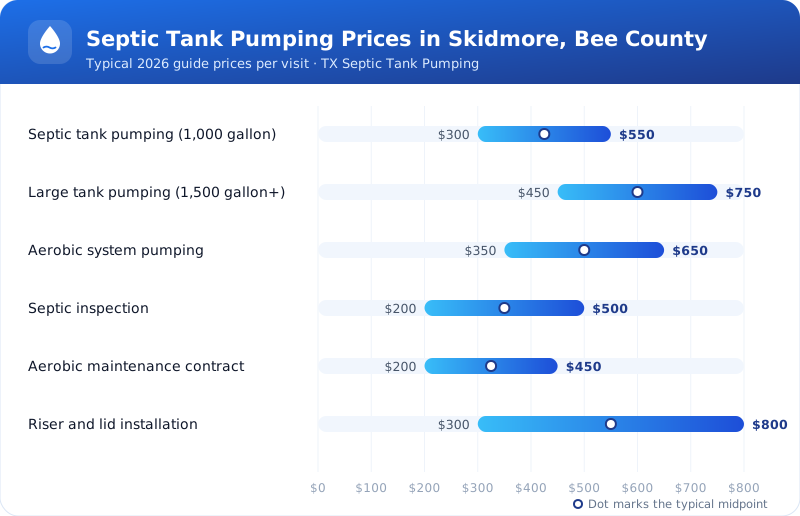
Use the table below to see how the two systems compare. Guide prices are ranges, not quotes, and the final figure depends on access, sludge depth and travel.
| System | What Pumping Involves | Typical Upkeep | Guide Price |
|---|---|---|---|
| Conventional 1,000 gallon tank | Remove sludge and scum from the tank | Pump every 3 to 5 years for many homes | $300 to $550 |
| Large tank, 1,500 gallon or more | Same process on a bigger volume | Schedule depends on household use | $450 to $750 |
| Aerobic treatment system | Pump the tank and check the unit | Yearly maintenance contract required | $350 to $650 for pumping, $200 to $450 a year for the contract |
What a Septic Pump Out Visit Usually Involves
A standard visit follows a predictable order. Knowing the steps helps you ask better questions and spot a rushed job.
- Locate the lidThe crew finds the access lids, which are often buried a few inches under soil or grass. Ask whether locating and uncovering is included in the quote.
- Open and inspectThe lid is opened so the crew can see the liquid level and the layers of sludge and scum.
- Measure the contentsThe crew checks how deep the solids sit, which tells them how much material needs to come out.
- Pump the tankThe waste is removed by vacuum truck and taken to an approved disposal site.
- Check the outletOn many tanks the crew also looks at the baffles and outlet and clears a filter if the system has one.
- Close and recordThe lid is secured and covered. You should receive a written note of the date and the tank condition.
How Often Skidmore Households Should Pump Their Tanks
A common guideline is to pump a conventional tank every three to five years. That range is a starting point. Your actual schedule depends on tank size, how many people live in the home and how much water goes down the drain each day.
Tank Size and Household Load
A 1,000 gallon tank in a home with a large family fills faster than the same tank in a home with one or two people. Guests, long weekends and home businesses can add load that is easy to overlook. If your tank is smaller than the household needs, plan on pumping more often.
Laundry and Water Use Habits
Large amounts of water in a short time can push waste into the drain field before solids have settled. Spreading laundry across the week, instead of running many loads in one day, gives the tank time to separate. Fixing leaks also reduces the water that enters the system.
Aerobic Systems on a Different Schedule
Aerobic systems need a maintenance contract on top of pumping, and that contract usually runs yearly. Pumping still matters, but the unit itself needs regular service to keep the treatment process working. Ask the company whether it offers both the pump out and the maintenance visits before you commit to either.
Warning Signs That Mean Call Now, Not Next Season
Some symptoms mean the tank is full or the system is struggling. Waste can back up from the tank into the house when the tank has no room to take in more liquid. Solids that leave the tank can also clog the drain field, and repairing a drain field costs far more than pumping. If you notice any of the signs below, schedule service promptly.
Slow drains in several fixtures at once, toilets that gurgle or back up, sewage odors in the yard or house, and unusually green or lush grass over the drain field are all reasons to call a pumping company and ask for an inspection.
What Should Never Go Down a Skidmore Septic System
Many septic problems start with things that should never have been flushed or poured down the drain. These items disturb the bacteria that break down waste or fill the tank with material that does not break down at all.
- Cooking grease, oil and fat, which harden in the pipes and tank
- Wipes labeled flushable, paper towels, diapers and feminine hygiene products
- Coffee grounds, eggshells and food scraps from a garbage disposal
- Paint, solvents, motor oil, pesticides and other chemicals
- Harsh drain cleaners and large amounts of bleach used regularly
- Medication, which can harm the bacteria in the tank