Septic tank pumping companies · Bastrop County
Listings last refreshed October 16, 2026
Best Septic Tank Pumping in Elgin: Trusted Local Experts
1 septic tank pumping company in Elgin, ranked by Pump Score using Google reviews and profile data.
✓ How we rankFree directory, no pay-to-rank
Septic tank pumping Elgin TX homeowners search for usually comes down to two questions: who can come out, and how soon. Elgin sits in Bastrop County, and our directory currently lists one ranked company in town, Double JP Septic, LLC. That makes this page different from a busy city listing. Below you will find what a pumping visit involves, how often a tank in this area typically needs service, and what guide prices look like before you pick up the phone.
Top Rated Septic Tank Pumping Companies in Elgin Compared
Compare the top picks side by side. Full write-ups follow below.
| # | Septic Company | Best for | Score | Rating | Verified |
|---|---|---|---|---|---|
| #1 | Double JP Septic, LLC | An established local septic company with plenty of reviews | 6.7 | 53 reviews | — |
Elgin Septic Tank Pumping Reviews and Ratings
1. Double JP Septic, LLC
Best for: An established local septic company with plenty of reviews
2117 Upper Elgin River Rd53 reviews
Score breakdown and details
- Location
- Elgin · 2117 Upper Elgin River Rd, Elgin, TX 78621
- Track record
- Established, healthy review volume
- Rating
- 53 Google reviews
- Profile
- Unclaimed listing (Google data)
- Today
- See hours on profile
Strengths
- 53 Google reviews, a well established track record
- Direct phone number published, no lead form in the way
- Has its own website with more detail on services
- Opening hours published
Watch Out For
The Google profile is not owner verified. Double check the address and phone when you call.
Our take: Our top pick in this area. A Pump Score of 6.7/10 reflects the best combination of rating, review depth and profile completeness here.
Hiring Local Septic Tank Pumping in Elgin
A septic tank is a buried, watertight container that holds wastewater long enough for solids to settle into a sludge layer while grease and light material float up as scum. Liquid flows out to a drain field. Over time the sludge layer grows until solids can leave the tank and clog the drain field, which is one of the most expensive repairs on a rural property. Regular pumping, usually every three to five years for a typical household, removes that buildup before it reaches the outlet.
Use this page as a planning guide. Check the company details, compare the guide ranges, and confirm what kind of system you have before you schedule. If your home runs an aerobic treatment unit instead of a conventional tank, the service plan is different, and the sections below explain why.
Who Pumps Septic Tanks in Elgin Right Now
The Elgin listing in our directory is Double JP Septic, LLC, located at 2117 Upper Elgin River Rd in ZIP 78621. The business has 53 Google reviews and a website, and its listed hours cover Monday through Saturday. That schedule matters if you work weekdays, since Saturday is the only weekend day on the list. Because Elgin has one ranked provider, a homeowner who needs a specific day should call early in the week and confirm availability before assuming a slot is open.
Before you book, ask a few direct questions. Confirm that the company services your part of town, ask what tank size they expect to find, and find out whether they handle aerobic units or only conventional tanks. Ask for the scope of the visit in writing, including whether locating and uncovering the lid is included or billed separately. A clear scope prevents surprises on the invoice and makes it easier to compare the work to the guide prices later on this page.
If you have not pumped the tank in several years, mention that when you call. The crew can plan for a heavier load, and you can ask whether they will note the sludge and scum levels for your records. Those notes help you pick the next pumping date with more confidence than a calendar guess.
How Often Elgin Households Should Pump
The three to five year guideline is a starting point, not a fixed rule. Several factors push a particular tank toward the short end of that range, and a few let it run longer. Review the list below and think about your home before you set a reminder on your phone.
Pumping timing is only one part of the picture. A tank that is pumped on time still needs a look at the drain field, the baffles and the outlet when the crew is on site. If a pump-out reveals heavy buildup far sooner than expected, ask the crew what changed in your household or your water use.
- Household size: more people means more wastewater and more solids reaching the tank each week.
- Tank size: a 1,000 gallon tank fills faster than a 1,500 gallon tank serving the same household.
- Garbage disposal use: ground food waste adds solids that settle into the sludge layer.
- Water habits: long showers, running dishwashers and laundry all add volume at once.
- Pumping history: the last service report is the best guide to how fast your tank fills.
- System type: aerobic units follow a maintenance schedule rather than the same pumping timeline.
Warning Signs Your Tank Is Full Before You Call
A full tank rarely fails all at once. The early signs show up in your plumbing, and they are easy to dismiss until the drain field is damaged. Check the list below each season, and treat two or more matches as a reason to schedule service soon.
If you see these signs, call before the drain field fails. While you wait for the crew, cut back on water use, skip the laundry marathon, and avoid running the dishwasher several times in a row.
- Slow drains in several fixtures at the same time, not just one sink
- Gurgling sounds in toilets or drains after water is used elsewhere in the house
- Sewage odor near the tank lid, the drain field or inside the home
- Soggy ground or unusually lush green grass over the drain field, even during dry weather
- Toilets or drains backing up after heavy water use such as laundry day
- Water rising in the lowest drain or shower when another fixture drains
What Happens During a Pumping Visit
A typical visit follows a predictable sequence. Knowing the steps helps you ask better questions, check the work and understand what your invoice covers. The exact process varies with the tank type and how buried the lid is.
Most visits take less time than homeowners expect, but a buried lid or a tank with a damaged baffle can extend the job. Ask the crew to show you the lid location and to explain any repair needs before they leave.
- Locate and uncover the lidThe crew finds the access lids, which are often buried under soil or turf. Uncovering can be a separate charge, so ask about it when you book.
- Open and look insideThe crew checks the tank for cracks, the condition of the baffles and the flow to the outlet. Problems here matter as much as the sludge level.
- Measure the layersThe sludge and scum layers are measured so the crew can judge how full the tank is and how quickly it is filling.
- Pump out the contentsA vacuum truck removes the liquids and solids. Waste is taken to a licensed disposal site, not dumped on the property.
- Clean the effluent filterIf your system has an effluent filter, it is cleaned or checked. Skipping this step lets fine solids reach the drain field.
- Replace the lids and record the visitThe lids go back on and the crew should leave a service note with the date, tank condition and any recommended repairs.
Aerobic Systems Need Their Own Plan
Aerobic treatment units use air and mixing to treat wastewater faster than a conventional tank does. They also have more moving parts, so the service plan is different. Many aerobic owners pay for a yearly maintenance contract and periodic sludge pumping. The table compares the two systems at a high level.
If you are not sure which system you have, check your permit records or ask the crew during your first visit. Mixing up the two can lead to skipped service on an aerobic unit, which is the kind of gap that causes early failure.
| Feature | Conventional septic tank | Aerobic treatment unit |
|---|---|---|
| How it treats waste | Solids settle and liquid flows to the drain field | Air and mixing treat wastewater before it leaves the unit |
| Pumping need | Typically every three to five years | Sludge pumping on the service schedule, often more than once a year |
| Ongoing service | Pumping and occasional inspection | Yearly maintenance contract is common |
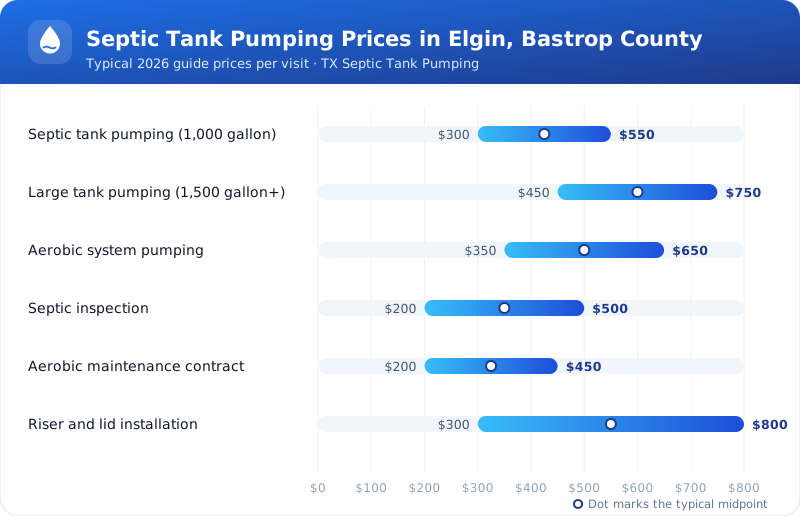
| Guide price range | $300 to $550 for a 1,000 gallon pumping | $350 to $650 for pumping, plus $200 to $450 for a yearly contract |
Planning Around Distance From Bastrop and Nearby Towns
Elgin residents who cannot get a timely visit from the local provider often look to the surrounding towns. The distances below are straight-line miles from Elgin as listed in our directory data. Use them to set expectations for travel charges and scheduling, and confirm service area coverage before you book.
Keeping a backup in mind is a good habit for any rural homeowner. A backup pumping contact saved on your phone shortens the wait when a tank backs up on a holiday weekend or after a storm.
Bastrop, 14 Miles Away
Bastrop is the closest larger town listed in our directory data. It is also the largest town near Elgin in this list, so it is a reasonable first place to look for a second option. Ask any company in Bastrop whether it serves Elgin before you schedule.
Taylor, Pflugerville and Hutto
Taylor and Pflugerville are each 17 miles from Elgin, and Hutto is 18 miles away. These towns sit at similar distances, so a provider there may be a practical option when the Elgin company is booked. Compare the service area and the scope of work, not only the distance.
Round Rock and Austin
Round Rock is 22 miles from Elgin and Austin is 28 miles away. Both are larger markets with more providers, which can help when local options are limited. Expect that a provider farther out may charge for travel, so ask about that before the crew arrives.
What Not to Flush or Pour Down the Drain
Most septic failures are caused by what goes down the drain, not by how often the tank is pumped. The items below either clog the outlet, kill the bacteria that break down waste, or fill the tank with material that does not break down. Post the list near the bathroom sink if your household needs a reminder.
When in doubt, throw it in the trash rather than the toilet. A small item in the wrong place can cost far more to fix than the convenience was worth.
- Wipes of any kind, including those labeled flushable, which often do not break down in the tank
- Cooking grease, oil and fats, which harden in the tank and clog the outlet
- Coffee grounds, eggshells and other coarse food waste
- Paint, solvents, gasoline, motor oil and pesticides
- Harsh chemical drain cleaners and large amounts of bleach
- Medications, cat litter and feminine hygiene products
Doing Your Own Septic Work in Texas
Some homeowners ask whether they can dig, install or replace a septic system themselves. In Texas, on-site sewage facilities are regulated by the Texas Commission on Environmental Quality, known as TCEQ. Any digging, installation or repair should be checked against TCEQ requirements and the rules your local permitting authority enforces before work starts.
Skipping that check can leave you with a system that does not meet the rules, which can cause trouble when you sell the property or when a failure occurs. A licensed professional can tell you what applies to your lot, including the setbacks and soil conditions that matter in Bastrop County.