Septic tank pumping companies · Austin County
Listings last refreshed October 16, 2026
Best Septic Tank Pumping in Cat Spring: Local Pros Compared
1 septic tank pumping company in Cat Spring, ranked by Pump Score using Google reviews and profile data.
✓ How we rankFree directory, no pay-to-rank
Septic tank pumping in Cat Spring, TX is a service most homeowners only think about when something goes wrong. This page explains how often a tank needs pumping, what the visit involves, what it typically costs, and how to choose a provider when the local field is small. Cat Spring is a small community in Austin County, and the directory currently lists one company with a Cat Spring address, so it helps to know what to ask before you call.
Top Rated Septic Tank Pumping Companies in Cat Spring Compared
Compare the top picks side by side. Full write-ups follow below.
| # | Septic Company | Best for | Score | Rating | Verified |
|---|---|---|---|---|---|
| #1 | Truchard Septics | Saturday appointments | 3.7 | 7 reviews | — |
Cat Spring Septic Tank Pumping Reviews and Ratings
1. Truchard Septics
Best for: Saturday appointments
1416 Dietrich Ln7 reviews
Score breakdown and details
- Location
- Cat Spring · 1416 Dietrich Ln, Cat Spring, TX 78933
- Track record
- New or lightly reviewed
- Rating
- 7 Google reviews
- Profile
- Unclaimed listing (Google data)
- Today
- See hours on profile
Strengths
- Direct phone number published, no lead form in the way
- Opening hours published
- Open on Saturdays
Watch Out For
Only 7 reviews so far, so the rating could still move. Worth asking about experience.
Our take: Our top pick in this area. A Pump Score of 3.7/10 reflects the best combination of rating, review depth and profile completeness here.
Hiring Local Septic Tank Pumping in Cat Spring
Texas septic systems fall under the Texas Commission on Environmental Quality, which sets the statewide rules for on-site sewage facilities. A pump-out is one of the simplest maintenance steps a household can schedule, and it is also one of the easiest to postpone. Solids build up in the tank over time. If they reach the outlet, they can clog the drain field, and a drain field repair costs far more than a routine service.
Use the sections below to decide when to book, recognize the warning signs, and read the guide prices before you call. The ranked company listing sits in the middle of the page so you can compare what is available in town and nearby.
How Often a Cat Spring Septic Tank Needs Pumping
Most septic tanks need pumping every three to five years. That range is a general guideline, and the right interval for your home depends on how much water the household uses and how many people live there. A busy family of five with a garbage disposal fills a tank faster than a couple who are away from home most of the week.
Tank size matters too. A smaller tank has less room for solids to settle, so it may need attention sooner. If you have never had a tank pumped, or you bought a home with an unknown service history, schedule a pump-out and inspection before you assume the tank is fine. The provider can measure the scum and sludge layers and tell you how much room is left before the next visit.
Records help more than most people expect. Write down the date of each pump-out, the company name, and any repairs. Over time, that log shows how quickly your tank fills, which is more useful than any general chart. If the dates are missing, the first visit should include a full inspection rather than a quick pump.
Warning Signs Your Tank Is Already Full
A full tank rarely fails all at once. The signs usually build over days or weeks, and most of them show up inside the house before they show up in the yard. Watch for these:
What to Do When You See a Sign
If you see one sign, it may be a clog in a single fixture. If you see two or more, or any backup that reaches a floor drain, stop using water heavily and call a provider. A full tank can push solids into the drain field, and that is when a simple pump-out turns into a costly repair.
- Drains that empty slowly, especially the kitchen sink and shower
- Gurgling from toilets or drains after you run water somewhere else
- Sewage odors inside the house or near the tank lid
- Wet, soggy ground or unusually green grass over the drain field
- Backups in a tub or toilet that clear and then return
What Happens During a Pump-Out Visit
A routine pump-out usually follows the same order. Methods vary by system, but this is the general sequence homeowners can expect.
Expect the visit to take less time than most people guess, although the length depends on tank size, access, and how full the tank is. Stay nearby so you can answer questions about the system and show where the lid is.
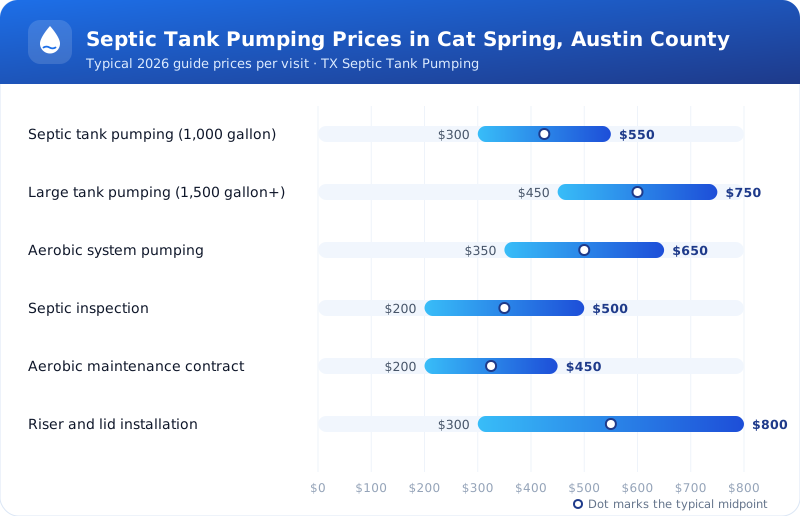
- Locate the lidThe crew finds the access lids, which may sit under soil or grass. If the lid is buried, uncovering it can be a separate charge, and our guide range for that work is $50 to $200.
- Open and check the tankThe crew opens the lid and looks at the liquid level, the scum layer, and the sludge layer. Some providers also check the effluent filter and baffles at this stage.
- Pump out the contentsA truck with a vacuum hose removes the liquid and solids, leaving the tank clean. Ask where the waste is taken once it leaves your property.
- Inspect and closeLook for cracks or damaged baffles, then replace the lids securely. Ask for a written note on the condition of the system and keep it with your records.
Questions to Ask Before You Book a Cat Spring Pump-Out
Because the local choice in Cat Spring is limited, a short phone call tells you a lot. Ask these before you schedule:
- What tank size do you pump, and how is the price set for it?
- Do you locate and uncover the lid, and is that included or extra?
- Is there a weekend or emergency callout charge?
- Will you check the baffles and effluent filter during the visit?
- Can you provide a written estimate before the work starts?
- Where is the waste taken after pumping?
What Not to Flush or Pour Into Your Septic System
Many of the most expensive pumping problems come from preventable damage. Solids that do not break down, or chemicals that harm the bacteria working inside the tank, cause most of the trouble. Keep these items out of the system:
Tank Treatments and Garbage Disposals
A garbage disposal adds solids to the tank faster. If you run one, expect a shorter interval between pump-outs, and ask your provider whether the current schedule fits your household.
Chemical additives sold as tank treatments are a common question. Our data does not establish that they replace pumping, and a pump-out remains the reliable step. Ask your provider before using any product.
- Wipes labeled flushable, which usually do not break down in the tank
- Grease, cooking oil, and fat poured down the sink
- Diapers, feminine products, and cotton swabs
- Paint, solvents, motor oil, and pesticides
- Coffee grounds, eggshells, and large amounts of food scraps
- Harsh drain cleaners used on a regular schedule
Conventional Tanks Versus Aerobic Systems in Cat Spring Homes
Some homes use aerobic systems instead of a simple tank. The two need different kinds of care, and each service carries its own guide range.
A conventional tank is pumped on a schedule, usually every three to five years, and the main job is removing settled solids. An aerobic system uses air and a treatment process, so it needs regular service visits and a maintenance contract along with periodic pumping. Our guide range for aerobic system pumping is $350 to $650, and a yearly aerobic maintenance contract runs $200 to $450. Do not skip the contract, since that is what keeps the treatment side running as designed.
Laundry, Water Use, and Habits That Protect the Drain Field
Water use is the other half of septic care. A tank works best when wastewater arrives at a steady pace rather than in a single rush. Running several large loads of laundry back to back, or taking long showers at the same time, can push more water into the tank than the system handles smoothly.
Spreading laundry across the week is a simple, practical habit. The same logic applies to dishwashers and showers. Fix running toilets and dripping faucets, since a constant trickle adds water every day without anyone noticing.
Keep vehicles, heavy equipment, and parking off the drain field, and avoid planting trees close to it. Roots can reach into the lines and damage them over time.
When a Backup Is an Emergency
If sewage comes up into a tub, shower, or floor drain, treat it as urgent. Stop running water, avoid the wet area, and keep children and pets away from it. Call a provider right away instead of waiting for a regular appointment.
Emergency or weekend callouts carry an extra charge. Our guide puts that at $100 to $300 on top of the normal service, so ask for the exact figure when you book.